
You stand on a patch of dirt. It doesn’t look like much—just stakes in the ground and maybe a pile of soil nearby. But someone tells you, “This is where your kitchen will be.”
That moment feels surreal. Because what you’re really stepping into isn’t just a build—it’s a process. And understanding that process is the difference between feeling lost… and feeling in control.
At its core, residential building construction is the step-by-step journey of turning raw land into a livable home, guided by a residential construction company that manages everything from planning to final handover.
Key Takeaways
- Residential construction follows clear phases—from lot selection to final walkthrough
- A residential construction company coordinates design, permits, and building execution
- Early decisions (lot, layout, utilities) shape everything that follows
- Understanding the process helps you avoid costly surprises
What Happens After You Choose a Residential Construction Company?
You’ve signed the contract. You’re excited. Then… nothing seems to happen.
This is where most people get uneasy.
Behind the scenes, your residential construction company is handling permits, design approvals, and logistics. It’s quiet—but critical work.
The Real First Step: Lot Selection
Not all land is equal. A corner lot, wooded backdrop, or waterfront view may come with a premium. These early choices influence:
- Home positioning
- Garage orientation
- Utility connections
- Long-term property value
You’re not just buying land—you’re choosing how your home lives on that land.
How Does Residential Building Construction Actually Work?
Let’s simplify it.
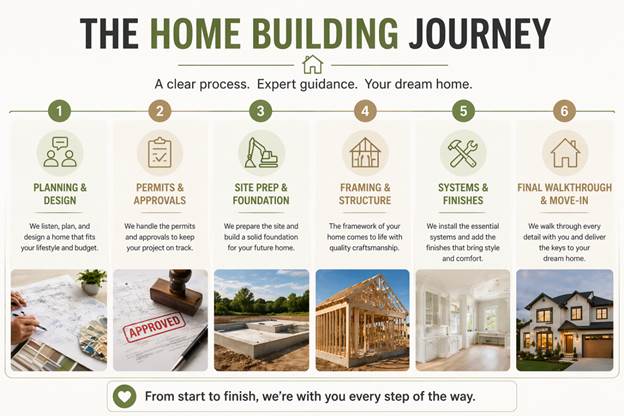
Residential construction typically follows these stages:
- Lot preparation and staking
- Excavation and foundation pouring
- Framing (structure goes up)
- Exterior sealing (roof, windows, doors)
- Interior systems (plumbing, electrical)
- Finishing (drywall, paint, fixtures)
- Final walkthrough and delivery
That’s the journey from dirt to keys in your hand.
The Moment It Becomes Real: Foundation to Framing
The foundation is literally what everything rests on. Footings are poured first—these carry the structural load of your entire home.
Then comes framing.
And this is where things move fast.
One day: a hole in the ground.
Next week: a full skeleton of a house.
Framing is often pre-measured and assembled quickly, especially in production builds. That’s why changes at this stage are difficult—or impossible.
“We shape our buildings; thereafter they shape us.” — Winston Churchill
Why Does the House Feel Smaller During Construction?
You walk through your future living room and think: Wasn’t this supposed to be bigger?
You’re not alone.
Without drywall, flooring, and visual reference points, spaces feel smaller and less defined. Once finishes are added, proportions make more sense.
It’s a perception gap—not a design flaw.
Mid-Process Reality Check: What You Should Look For
| Stage | What to Check | Simple Cue | Common Mistake |
| Foundation | Layout alignment | Compare to plan | Ignoring measurements |
| Framing | Room sizes, wall placement | Walk the space | Expecting easy changes |
| Pre-drywall | Wiring, plumbing | Take photos | Forgetting documentation |
| Finishing | Fixtures, paint | Inspect closely | Rushing walkthrough |
What Is Operational Finance in Residential Construction?
Operational finance refers to how a residential construction company manages costs, cash flow, and project budgeting throughout the build.
In simple terms:
It ensures your home is built on time and within budget—without financial surprises.
This includes:
- Material cost planning
- Labor scheduling
- Change order pricing
- Construction financing coordination
Without strong operational finance, delays and cost overruns become far more likely.
The 3-Part Framework Smart Homeowners Follow

1. Plan with Precision
- Understand your lot and layout
- Confirm design before build starts
2. Document Everything
- Take photos during pre-drywall stage
- Track decisions and changes
3. Inspect with Intent
- Walk through each phase
- Ask questions early—not late
Common Mistakes (And What to Do Instead)
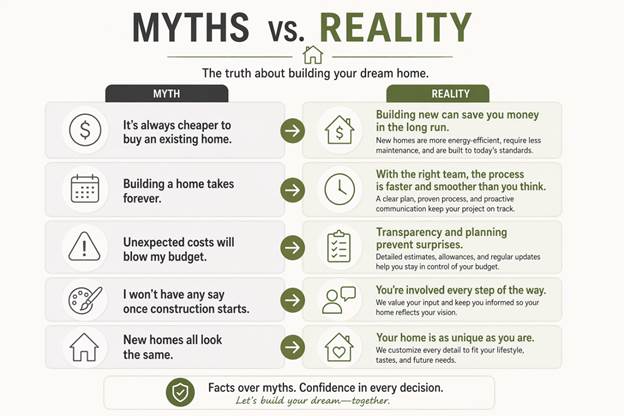
Mistake: Assuming changes can happen anytime
Do instead: Finalize design early
Mistake: Skipping site visits
Do instead: Visit during key phases
Mistake: Ignoring behind-the-wall systems
Do instead: Document wiring and plumbing
A Familiar Real-World Scenario
You visit your home during framing. It feels small. You panic.
But instead of reacting, you:
- Check measurements
- Compare with plans
- Talk to your builder
Weeks later, drywall goes up—and suddenly everything feels right.
That’s the difference between reacting emotionally… and acting informed.
What Happens at the End?
As construction wraps up, you’ll notice:
- Cabinets and countertops installed
- Floors protected with temporary coverings
- Missing mirrors or landscaping (done last)
You’ll do a final walkthrough with your residential construction company to identify small fixes.
This isn’t about perfection—it’s about precision.
Conclusion:
Residential building construction can feel overwhelming—but it doesn’t have to be.
When you understand the process, ask the right questions, and work with a capable residential construction company, something shifts.
You stop guessing.
You start participating.
And that patch of dirt?
It becomes something deeply personal—something built with intention.
Audio Summary (Separate Voice Version)
Building a home isn’t just construction—it’s a guided process. From choosing the right lot to understanding framing and finishes, each step matters. A strong residential construction company uses operational finance to keep everything on track. When you know what to expect, you move from uncertainty to confidence.
Ready to Start Your Homebuilding Journey?
Building a home is a big decision—and having the right team by your side makes all the difference. If you’re looking for clarity, transparency, and a smoother construction experience, SO is here to help.
Get in touch today to discuss your project:
📞 Phone: 218-546-3474
📧 Email: brayden@shafercustomhomes.com
🌐 Website: Shafer Construction Custom Homes and Remodeling
📍 Office: 41938 Minnesota 6, Emily, MN
FAQ
What makes a good residential construction company?
Clear communication, transparent pricing, and strong project management.
What are the best practices when building a home?
Finalize designs early, document progress, and inspect key stages.
When to hire a residential construction company?
As early as possible—ideally before purchasing land.
What services does a residential construction company provide?
Design coordination, permits, construction, and final delivery.
How does operational finance impact homebuilding?
It ensures cost control, timely progress, and fewer financial surprises.
Does SO help with residential construction planning?
Yes, SO focuses on guiding clients through every phase with clarity and trust.
How does SO ensure quality during construction?
Through structured processes, inspections, and consistent communication.
What is the cost of residential construction?
Costs vary based on location, materials, and customization level.